


Rosemary Oil for Thinning Hair: Smarter Routine
You catch your reflection while tying your hair up, and suddenly your part looks brighter than it used to. Then the spiral starts: scalp oils, serums, brushes, supplements, videos, opinions. Somewhere in the middle of that noise, rosemary oil for thinning hair starts sounding like either the answer or just one more thing to feel let down by. The truth is quieter than that. Some routines help. Some make roots greasy, expectations high, and wash day harder than it needs to be. This guide is here to help you sort out what thinning hair may actually be, why the first fixes often fail, and what a more realistic routine can look like.
For ingredient context, Noorwa’s earlier guide on what rosemary can and cannot do for early thinning is a useful companion. This article focuses on the routine side.
What this problem actually is
Thinning hair is not always the same thing as breakage, and it is not always the same thing as heavy shedding. Sometimes it shows up quietly first: a wider part, less fullness in your ponytail, or more scalp showing at the crown. The American Academy of Dermatology lists a widening part and a thinner ponytail among the early signs many women notice.
Breakage usually leaves shorter snapped strands and rougher ends. Thinning usually means fewer hairs are staying where they used to over time. That difference matters, because a routine for damaged lengths does not always match a scalp-level issue.
- A brightening part can show up before you ever think of it as hair loss.
- A smaller-feeling ponytail can be more useful than counting hairs after one wash.
- Smooth bald patches, pain, scaling, or sudden dramatic loss point to a different conversation.
“I kept calling it breakage because that felt easier than admitting my hair looked thinner.” — Alina, Toronto
Why it happens
There usually is not one tidy reason. Thinning can come from genetics, hormone shifts, stress, illness, iron issues, thyroid changes, postpartum changes, tight hairstyles, irritation, or a scalp that has been mostly ignored while the ends got all the attention.
- Internal factors: pattern thinning, postpartum shedding, perimenopause, thyroid changes, nutritional gaps, and illness can all shift the growth cycle.
- External factors: tight ponytails, heavy buildup, bleach, heat, rough detangling, and an irritated scalp barrier can make a slow problem feel faster.
- Overlap: you can have more than one cause at the same time, which is why copying someone else’s routine often disappoints.
That overlap is where the confusion starts. People blame themselves, or they blame one product, when the real issue is that the cause and the plan never matched.
“What made me feel stuck was not knowing whether this was stress, hormones, or just damage piling up.” — Renee, Austin
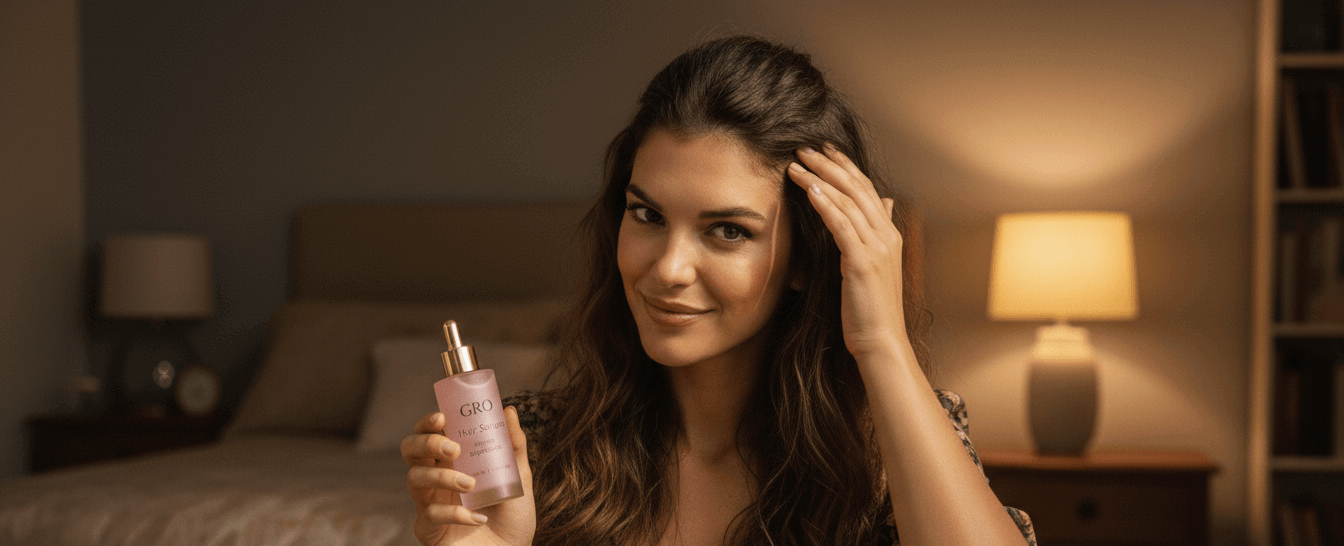
Early pattern changes matter more than one bad hair day
A lot of people do not first notice thinning because handfuls of hair fall out. They notice it because their usual part, bun, or ponytail starts behaving differently. Catching that earlier makes it easier to choose a routine that fits instead of reacting in a panic.
Who deals with this most
This can show up across ages and hair types, but some patterns come up more often than others. Seeing yourself clearly in one of them can make your next step feel less random.
- Women in their 20s to 40s: stress, styling, under-eating, and scalp neglect can blur the line between breakage and real thinning.
- Postpartum readers: shedding often arrives a few months after birth and can feel more dramatic than expected.
- Perimenopausal women: density changes often become more visible around the part and crown.
- People who wear tight styles often: repeated pulling can slowly stress the hairline and make already-fine hair look even lighter.
- Anyone with a family pattern: gradual change can be easy to brush off at first, which is why noticing it early matters.
“I thought thinning hair was a later problem, not something I’d be dealing with while juggling work, sleep debt, and a messy bun.” — Nicole, Chicago
What people try first and why it fails
Most people are not failing because they are careless. They are failing because the first fixes are usually trend-based, too heavy, too vague, or too annoying to keep doing long enough to learn anything from them.
- They overapply. Too much oil can flatten fine roots and turn one experiment into a full wash-day recovery mission.
- They put it mostly on the hair instead of the scalp. Softer lengths are nice, but that is not the same job.
- They expect fast proof. Hair changes move slowly, so a two-week verdict usually says more about your patience than the routine.
- They keep the wrong format. A dry scalp may like a richer oil. Fine hair that goes limp fast may do better with a lighter serum.
- They ignore irritation. Tingling is not always progress. Sometimes it is just irritation with a better publicist.
“I did not need more steps. I needed fewer steps that actually made sense for my scalp.” — Maya, Denver
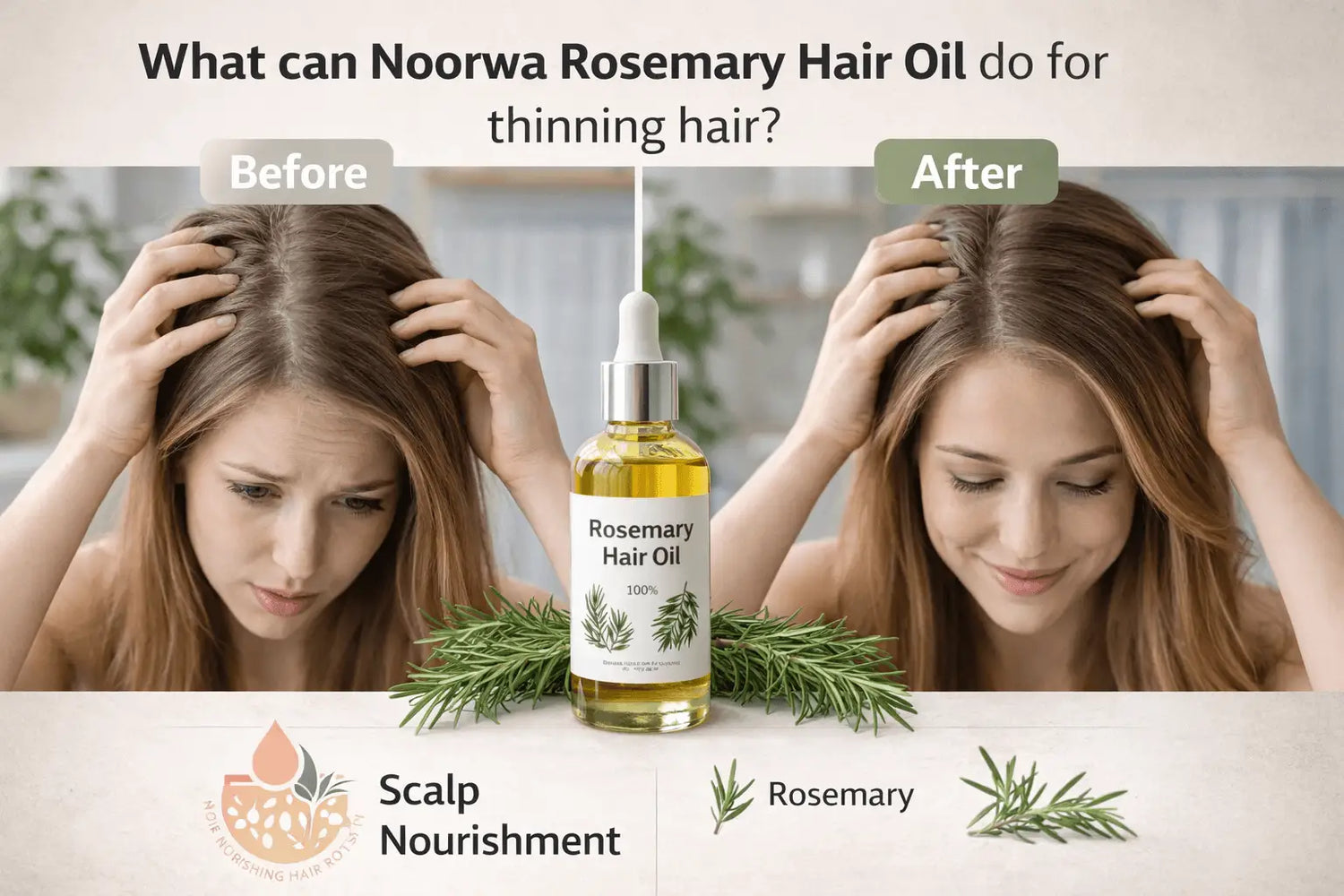
Visible progress usually starts with less guessing
A useful routine feels boring in the best way. You know how much to use, where it goes, and whether your scalp likes it. That kind of steadiness tends to beat dramatic experiments that leave your roots greasy and your expectations louder than the timeline.
What actually helps and why
Rosemary earns attention because it is one of the better-known scalp-support ingredients in early pattern thinning. A 2015 comparative trial is one reason it keeps showing up in the conversation, but the smarter takeaway is not that rosemary is magic. It is that a scalp-first routine may help some people when the cause fits, the formula is tolerable, and the routine is consistent.
That is also why format matters. Cleveland Clinic’s guidance leans into scalp application, small amounts, and patience over flooding the hair shaft with oil. So instead of asking, “What is the strongest thing I can put on my head?” it helps to ask, “What can I keep using without hating the process?”
Inside Noorwa’s current Hair Rituals lineup, the most logical starting points are a rosemary-led scalp oil, a richer batana-and-rosemary option, a lighter daily serum, an everyday repair-style serum, and a peptide-led lightweight route. Which one makes sense depends less on hype and more on your scalp, your hair density, and your tolerance for residue.

The most direct match when you want a rosemary-first scalp ritual and like pairing application with massage instead of coating your lengths.

A better fit when your scalp feels dry or stripped and you want something a little richer without losing the rosemary angle.

This makes the most sense when greasy roots are what usually make you quit. It is the easiest entry point for a simple, steady scalp routine.
A logical option when you want a lightweight daily-use texture and prefer a serum path over a more traditional oil ritual.
“I stopped choosing products by how intense they sounded and started choosing them by whether I’d still want to use them next week.” — Elise, Seattle
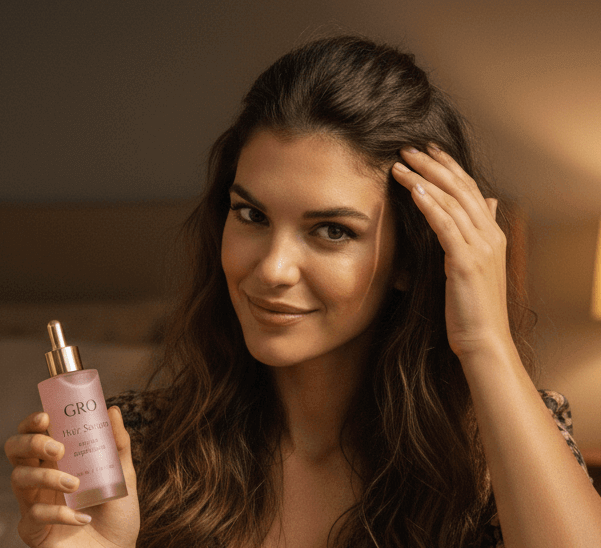
Your roots usually respond better to calm repetition than intensity
A few deliberate minutes repeated consistently usually help more than a huge routine you only manage on your best Saturdays. The right product is often the one that lets you stay steady without dreading the cleanup.
Realistic next steps
- Pick one format first. Do not test three oils and two serums at the same time.
- Use less than you think you need. Focus on the scalp, not a glossy coating over your whole head.
- Track one marker. Your part, your ponytail, or your shedding pattern is enough. Daily panic-checking only makes the timeline feel slower.
- Give it time. Hair routines usually reveal more over months than over days.
- Stop if your scalp gets angry. Burning, lingering redness, bumps, or worsening flakes are signs to pull back, not push harder.
- Know when to get help. The AAD recommends a dermatologist because effective hair-loss treatment starts with finding the cause. Sudden shedding, smooth round bald patches, pain, or rapid worsening deserve more than another trend.
“The biggest shift was stopping the daily mirror panic and letting one routine answer back over time.” — Lara, Phoenix
Frequently Asked Questions
Does rosemary really help when hair is thinning?
It can help some people, especially when the issue is early pattern thinning and the scalp routine is consistent. It is not a guaranteed fix, and it is not the right answer for every kind of hair loss.
How often should I use rosemary on my scalp?
Start with what your scalp can handle. For some people that means a few times a week. For others, a lighter serum used more regularly feels easier to stick with than a heavier oil treatment.
Can I leave it on overnight?
Sometimes, yes, but overnight is not automatically better. If your scalp gets itchy, greasy, or irritated fast, a shorter contact time may work better for you.
Why does rosemary make my hair look greasy?
Usually it is an amount problem, a format problem, or both. Fine hair and dense oils are not always a happy pair, which is why some people do better with a lighter serum texture.
A strong fit when your main frustration is oily-looking roots or a routine you keep dropping because it feels too heavy.
How long does it usually take to notice a difference?
Hair routines rarely move on social timelines. Think in months, not days. Consistency usually matters more than doing a lot all at once.
Should I apply it to my scalp or to my hair?
If the goal is thinning support, think scalp first. Putting oil through the lengths may make hair feel softer, but it does not do the same job as a scalp-focused routine.
When should I see a dermatologist instead of trying another product?
See one sooner if you have sudden shedding, smooth bald patches, pain, burning, or scaling, or if the thinning is speeding up. A diagnosis can save you months of guessing and help you separate shedding, breakage, and true hair loss more clearly.
You do not need the loudest routine to respond to thinning hair well. A calmer plan, a better texture match, and a little patience usually take you further than one more all-or-nothing experiment.
Written by the Noorwa Editorial Team — reviewed for accuracy against current dermatological guidance.
